|
bovender framework
C# framework that implements MVVM and more
|


|
|
bovender framework
C# framework that implements MVVM and more
|
|
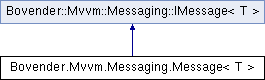
Conveys a message from a view model to a consumer (typically, a view) that has subscribed to the Sent event. More...
Public Member Functions | |
| virtual void | Send (T messageContent, Action< T > respond) |
| Calling this method will raise the Sent event with a message content and a callback method that can be used by the View to send a return signal. More... | |
| virtual void | Send (T messageContent) |
| Raises the Sent event with a MessageArgs instance that encapsulates the messageContent More... | |
| virtual void | Send () |
| Sends a simple message that does not need responding to. More... | |
Events | |
| EventHandler< MessageArgs< T > > | Sent |
| Consumers of the view model subscribe to this event if they want to listen for the message. More... | |
 Events inherited from Bovender.Mvvm.Messaging.IMessage< T > Events inherited from Bovender.Mvvm.Messaging.IMessage< T > | |
| EventHandler< MessageArgs< T > > | Sent |
Conveys a message from a view model to a consumer (typically, a view) that has subscribed to the Sent event.
| T | Type of the content of the message (must be a MessageContent object or a descendant. |
| T | : | MessageContent | |
| T | : | new() |
Definition at line 31 of file Message.cs.
|
inlinevirtual |
Calling this method will raise the Sent event with a message content and a callback method that can be used by the View to send a return signal.
| messageContent | Content of the message. |
| respond | Callback method that accepts a parameter of same type as messageContent . |
Definition at line 52 of file Message.cs.
|
inlinevirtual |
Raises the Sent event with a MessageArgs instance that encapsulates the messageContent
| messageContent | Derivate of MessageContent that defines the message content. |
Definition at line 80 of file Message.cs.
|
inlinevirtual |
Sends a simple message that does not need responding to.
Definition at line 88 of file Message.cs.
| EventHandler<MessageArgs<T> > Bovender.Mvvm.Messaging.Message< T >.Sent |
Consumers of the view model subscribe to this event if they want to listen for the message.
Definition at line 39 of file Message.cs.
 1.8.11